From AI mood prediction to guided meditation to licensed therapy — these are the 10 best mental health apps for managing anxiety, stress, and emotional well-being in 2026.

Founder at Anticipate
Published:
| EDITOR’S CHOICE | BEST FOR MEDITATION | BEST FOR DAILY MOTIVATION |
| Anticipate App — AI-powered mood tracking and therapy preparation | Headspace — Structured mindfulness courses for beginners and beyond | Finch — Gamified self-care that meets you where you are |
| Predicts your mood using passive device data. Generates therapy notes automatically. Free-forever core tracking with no ads, fully private. Best for people navigating mental health care with medication, therapy, and self-care. | The gold standard for guided meditation with multi-week courses, Sleepcasts, and SOS sessions for acute stress. Best for building a consistent mindfulness habit. | A virtual pet that grows as you complete self-care goals. Approachable, non-judgmental, effective for people who struggle with motivation on hard days. Generous free tier. |
Note: Apps support mental wellness but are not a replacement for professional care. Combining digital tools with a licensed clinician delivers the strongest outcomes.
We evaluated mental health apps across six categories: mood tracking, meditation, AI-powered support, therapy access, CBT-based exercises, and guided coping tools.
We prioritized apps that are widely recognized, actively maintained, supported by research-informed approaches, and transparent about privacy practices. Each app was assessed on features, pricing, ease of use, and how well it complements professional mental health care.
Features, pricing, and platform availability at a glance.
| App | Best For | Focus | Cost | Platform |
| Anticipate App | AI-powered mood tracking, prediction and therapy preparation | Mood prediction, medication tracking, therapy prep | Free forever or $3.99/mo or $34.99/yr | iOS |
| Headspace | Mindfulness and beginner-friendly meditation | Guided meditation | $12.99/mo or $69.99/yr | iOS, Android |
| Calm | Sleep, relaxation, and stress relief | Sleep, meditation, relaxation | $16.99/mo or $79.99/yr | iOS, Android |
| Wysa | AI-guided emotional support and self-reflection | AI chatbot, CBT coaching | $19.99/mo or $74.99/yr | iOS, Android |
| Moodfit | Mood pattern tracking with CBT and breathwork tactics | Mood tracking and CBT tools | $9.99/mo or $39.99/yr | iOS, Android |
| MindShift CBT | Evidence-based anxiety relief tools | Anxiety management | Free | iOS, Android |
| Finch | Gamified self-care and daily journal | Self-care gamification | $9.99/mo or $39.99/yr | iOS, Android |
| Daylio | Quick mood tracking without writing | Icon-based mood journaling | $4.99/mo or $59.99/yr | iOS, Android |
| Insight Timer | Free meditation content and community | Meditation library | Free or $9.99/mo or $59.99/yr | iOS, Android |
| Talkspace | Online therapy with licensed professionals | Licensed therapy access | Starting from $69/week | iOS, Android, Web |
Below is a detailed overview of each solution — what it does best, key features, cons, and pricing — so you can find the right fit for your needs.
Best for: AI-powered mood tracking, prediction and therapy preparation
Mental health treatment works — 80% of people can achieve remission with evidence-based care. But 46% drop out before it works.
Anticipate App is built to close that gap.
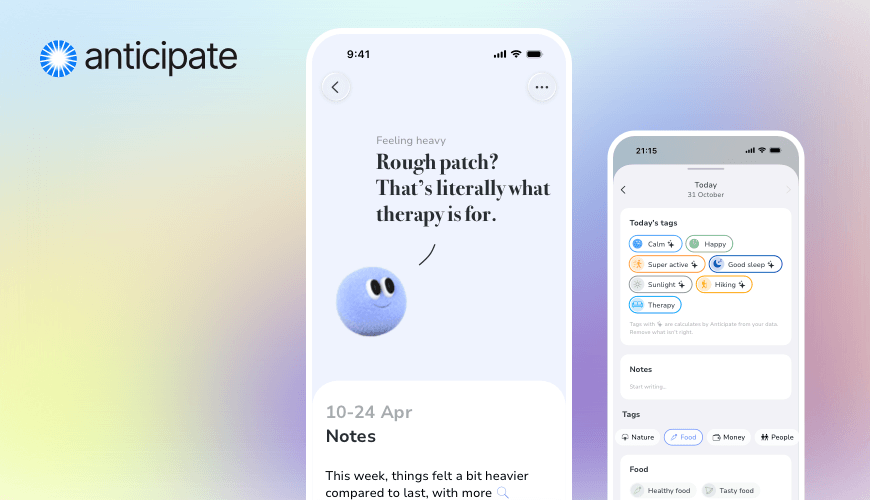
It’s a private mood journal and mental health co-pilot that predicts your mood, spots patterns, and helps you prepare for therapy sessions — while your phone stays in your pocket. Using a sensor-fusion model, it blends data from Apple Health (sleep, activity, sport), environment (weather, travel), habits (meditation, sunlight), and your past entries to create automatic daily tags and predictions.
Each morning, Anticipate greets you with a mood forecast and a guided journal prompt. It also generates therapy notes and talking points, so every consultation starts informed. For people navigating mental health care with medication, therapy, and self-care, Anticipate is the trusted co-pilot through every step of treatment.
Most mood apps ask you to track everything manually. Anticipate flips that: it gathers signals automatically and analyzes them alongside your manual tags. You get insights even on days you don’t open the app. The therapy preparation feature is what truly sets it apart — people don’t start therapy, or cancel it, because they’re afraid they have nothing to discuss. Anticipate solves that by turning your data into clear talking points focused on feelings, what’s improving, what’s harder, and what might be driving the change.
Privacy: No email sign-up. All journal data on-device. Zero data-retention AI models. Optional Face ID. No ads.
Best for: Mindfulness and beginner-friendly meditation
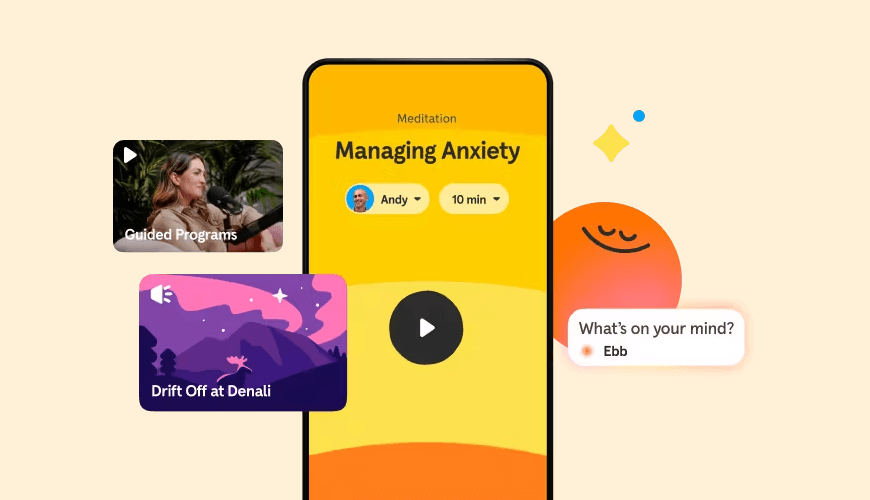
Headspace is one of the most consistently recommended mindfulness apps, with guided meditations, sleep tools, and structured multi-week programs that make it easy for beginners to build a habit.
Sleepcasts offer soothing bedtime audio. SOS sessions provide immediate help during acute stress. Focus music and mindful movement exercises round out the experience. The structured course approach — building skills over weeks — makes it particularly effective for newcomers.
Best for: Sleep, relaxation, and stress relief

Calm stands out for sleep support and calming audio content. Its signature Sleep Stories — soothing narratives voiced by celebrities — help users fall asleep naturally. The Daily Calm offers a new 10-minute meditation every morning.
Masterclasses cover stress management, mindful eating, and resilience. Some insurers (Kaiser Permanente, UnitedHealthcare) offer Calm free to members.
Best for: AI-guided emotional support and self-reflection
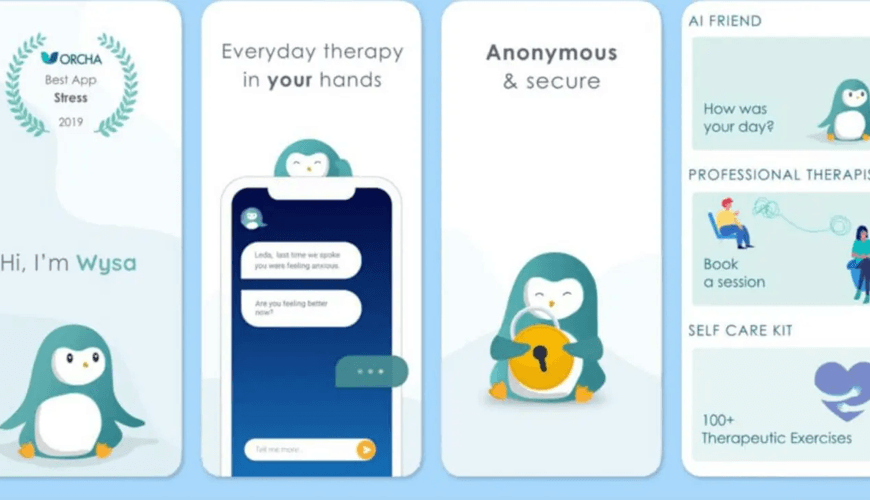
Wysa uses an AI chatbot to help users explore thoughts and emotions through guided conversations, journaling, and coping exercises. It draws on CBT, DBT, mindfulness, and breathing techniques.
Available 24/7, Wysa is a reliable private space for real-time stress management between therapy sessions. Optional coaching from trained mental health professionals is available as an add-on.
Best for: Mood pattern tracking with CBT-based habit building
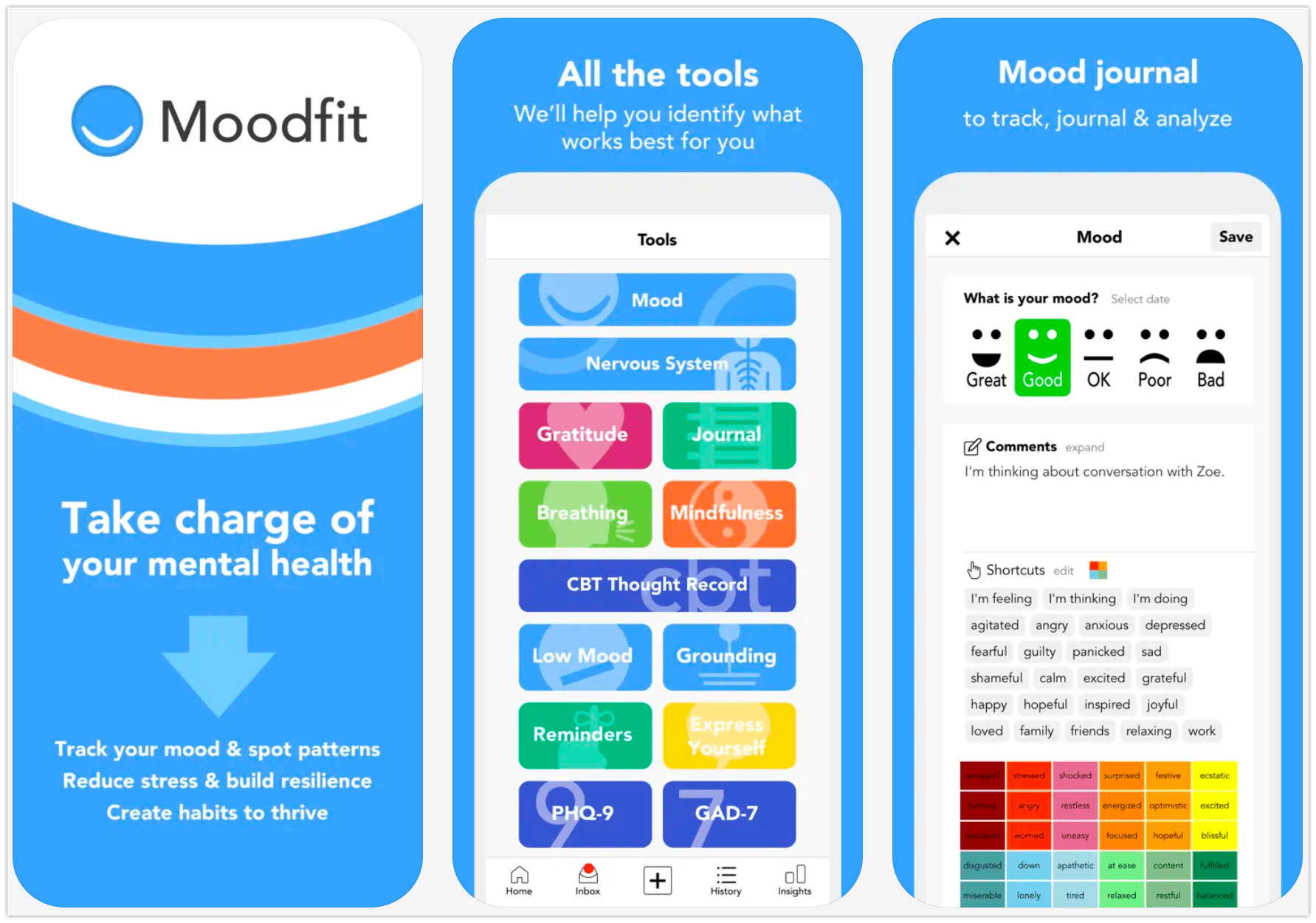
Moodfit combines mood tracking with CBT-based tools for thought analysis, gratitude, and breathing exercises. It also tracks sleep, water, and exercise to show how habits connect to your mood.
Built-in clinical assessments (PHQ-9, GAD-7) and live meditation sessions add depth. One of the more affordable options in this category.
Best for: Evidence-based anxiety relief tools
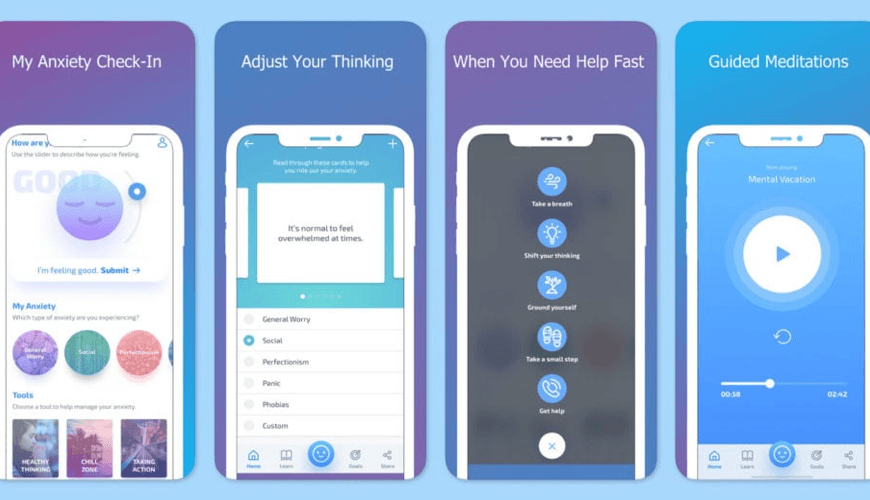
MindShift CBT is designed specifically for anxiety using evidence-based CBT techniques. Developed by Anxiety Canada (As of April 1, Anxiety Canada has officially ceased operations and is no longer available), it offers thought journals, coping cards, fear ladders, and step-by-step strategies for worry, panic, and social anxiety.
Unlike meditation apps, MindShift emphasizes challenging anxious thoughts and building healthier thinking patterns. Completely free with no ads or hidden costs — one of the most accessible clinical-grade tools available.
Best for: Gamified self-care and daily motivation
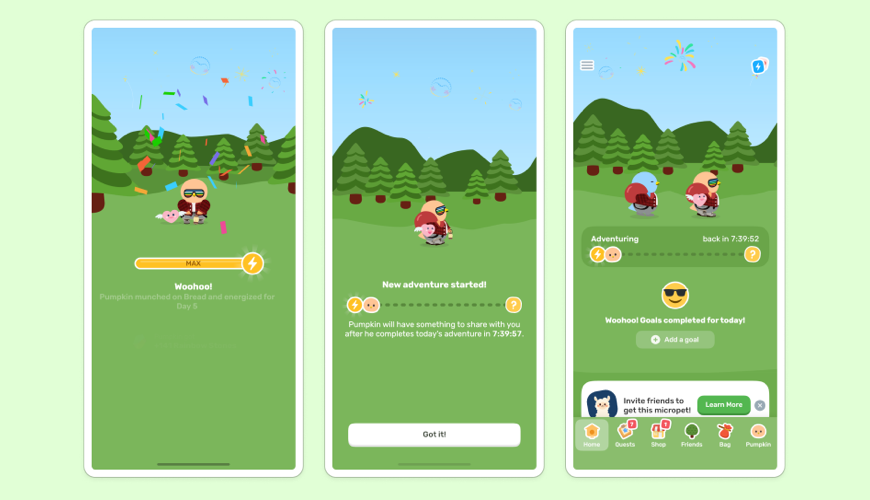
Finch makes self-care feel less like a chore by turning it into a game. A virtual pet bird grows and goes on adventures as you complete daily goals — providing extra motivation to stick with habits.
Goals flex to your energy level: from drinking water to calling a friend. Guided journaling, breathing exercises, mental health quizzes, and the Tree Town social feature round out an approachable, non-judgmental experience.
Best for: Quick mood tracking without writing
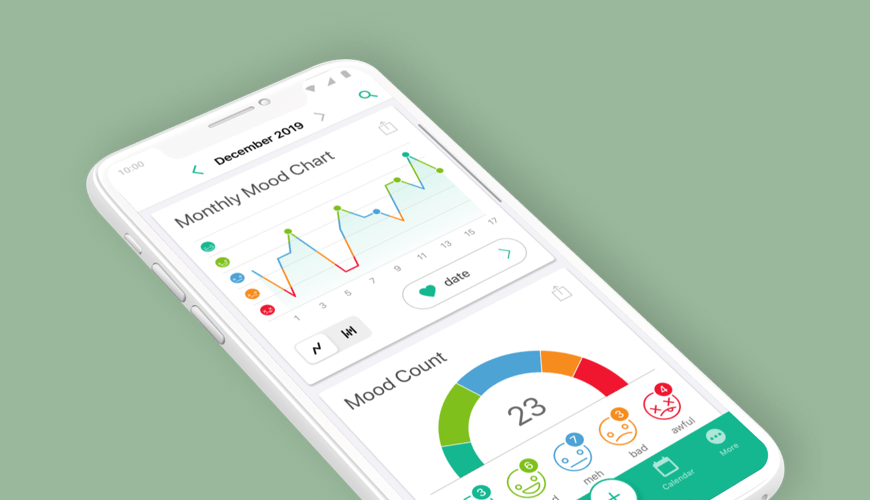
Daylio is built for people who want to track their mood but don’t like to write. Pick icons for your mood and activities — logging takes under a minute.
Over time, entries become charts showing how habits affect mood. Premium users can export data to share with a therapist, making Daylio a useful complement to professional care.
Best for: Free meditation content and community
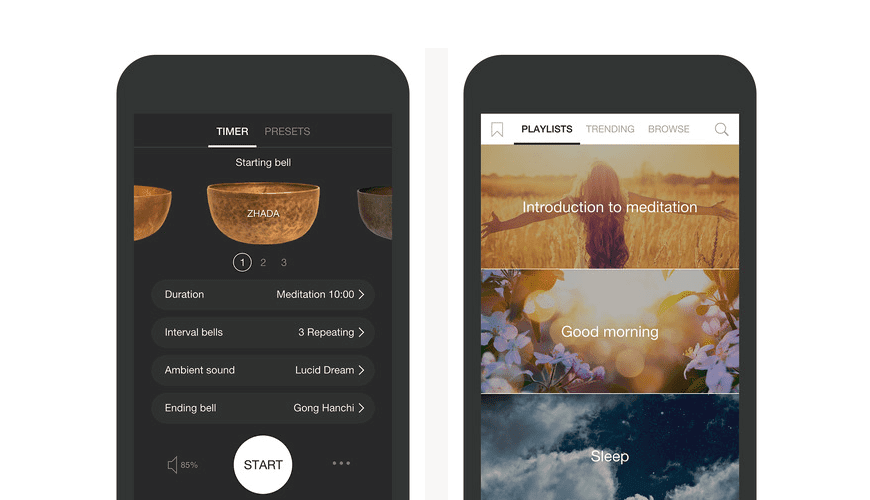
Insight Timer has the largest free library: over 200,000 guided meditations, music tracks, and sleep content from teachers at institutions like Stanford and Harvard.
Live events, yoga classes, community groups, and a customizable meditation timer make it both comprehensive and social. Quality and depth of free content is unmatched.
Best for: Online therapy with licensed professionals
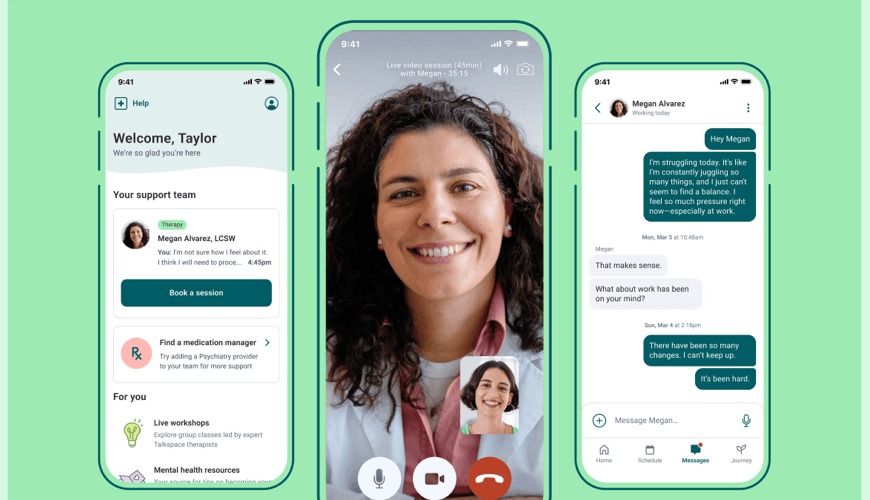
Talkspace connects you with licensed therapists and psychiatrists through video, audio, and text-based therapy. Asynchronous messaging lets you write anytime and get thoughtful responses throughout the week.
Insurance accepted from many major providers, which can make therapy affordable or fully covered. All sessions are HIPAA-compliant. Couples therapy and teen therapy options available.
Research supports the use of digital mental health tools as part of a broader care strategy. A 2017 meta-analysis in World Psychiatry found that smartphone-based interventions showed significant reductions in depressive symptoms compared to control conditions (Firth et al., 2017).
A 2018 clinical review in Evidence-Based Mental Health confirmed that apps using CBT, mindfulness, and mood tracking can support emotional awareness and help reduce mild symptoms of stress, anxiety, and low mood (Torous et al., 2018).
However, outcomes are strongest when digital tools are combined with professional support. The National Institute of Mental Health notes that technology-based tools are most effective as complements to, not replacements for, licensed clinical care. Apps can help users practice coping skills, track emotional patterns, and access guided exercises but they cannot provide a formal diagnosis or personalized treatment plan.
If symptoms persist, worsen, or interfere with daily life, speaking with a qualified mental health professional provides more effective and individualized care.
Mental health apps support mindfulness, mood awareness, and daily coping. But if anxiety, depression, or emotional distress is affecting relationships, work, sleep, or quality of life, professional care may provide more effective support.
Combining daily tools with professional care delivers the strongest outcomes. Apps like Anticipate App are specifically designed to complement therapy — generating session notes and talking points that make every appointment more productive.
1. Firth, J., Torous, J., Nicholas, J., et al. (2017). The efficacy of smartphone-based mental health interventions for depressive symptoms: A meta-analysis of randomized controlled trials. World Psychiatry, 16(3), 287-298.
2. Torous, J., Nicholas, J., Larsen, M. E., Firth, J., & Christensen, H. (2018). Clinical review of user engagement with mental health smartphone apps. Evidence-Based Mental Health, 21(3), 116-119.
3. National Institute of Mental Health. Technology and the Future of Mental Health Treatment.
4. Mobile Technologies for Supporting Mental Health in Youths: Scoping Review.
5. Effectiveness of Digital Mental Health Tools in LMICs: Systematic Review and Meta-analysis.

Download Anticipate and see how passive tracking and AI-powered insights can support your mental health journey.
Designed for iPhone

Scan to download

Scan to download
